

WEWO Techmotion
WEWO Techmotion develops standard and custom AGVs for automating internal flows: pallet and cart handling, line feeding, and special applications.
The portfolio ranges from floor-to-floor transfer through to stacking into racking and custom applications, with fleet management, configurable guidance and safety integrated into every vehicle.
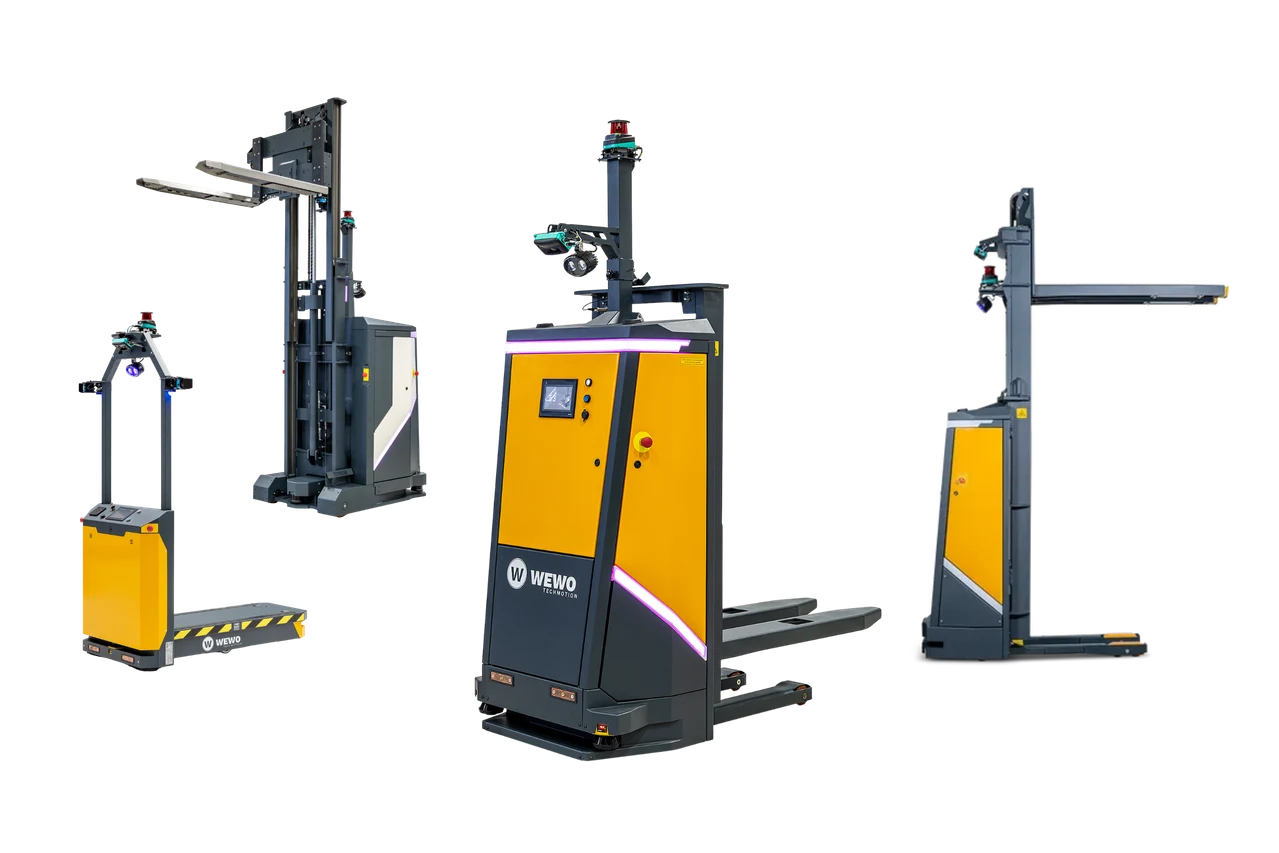
WEWO means more than a single AGV
In a real project the flows differ: a floor-to-floor transfer calls for a different vehicle from positioning into racking at three metres, or from line feeding with carts. WEWO makes it possible to choose the right model for each flow, from a portfolio in which all vehicles share the same software, guidance and safety layer.
WEWO is not limited to a single model or a single application. The range starts from well-defined standard vehicles, but it can also move towards configurations adapted to the real situation on site, without breaking the system logic.
WEWO can cover pallet handling, cart handling, product handling, assembly automation and machine cell loading. That makes the brand relevant to production, warehousing and processes in which one type of AGV does not solve the whole problem.
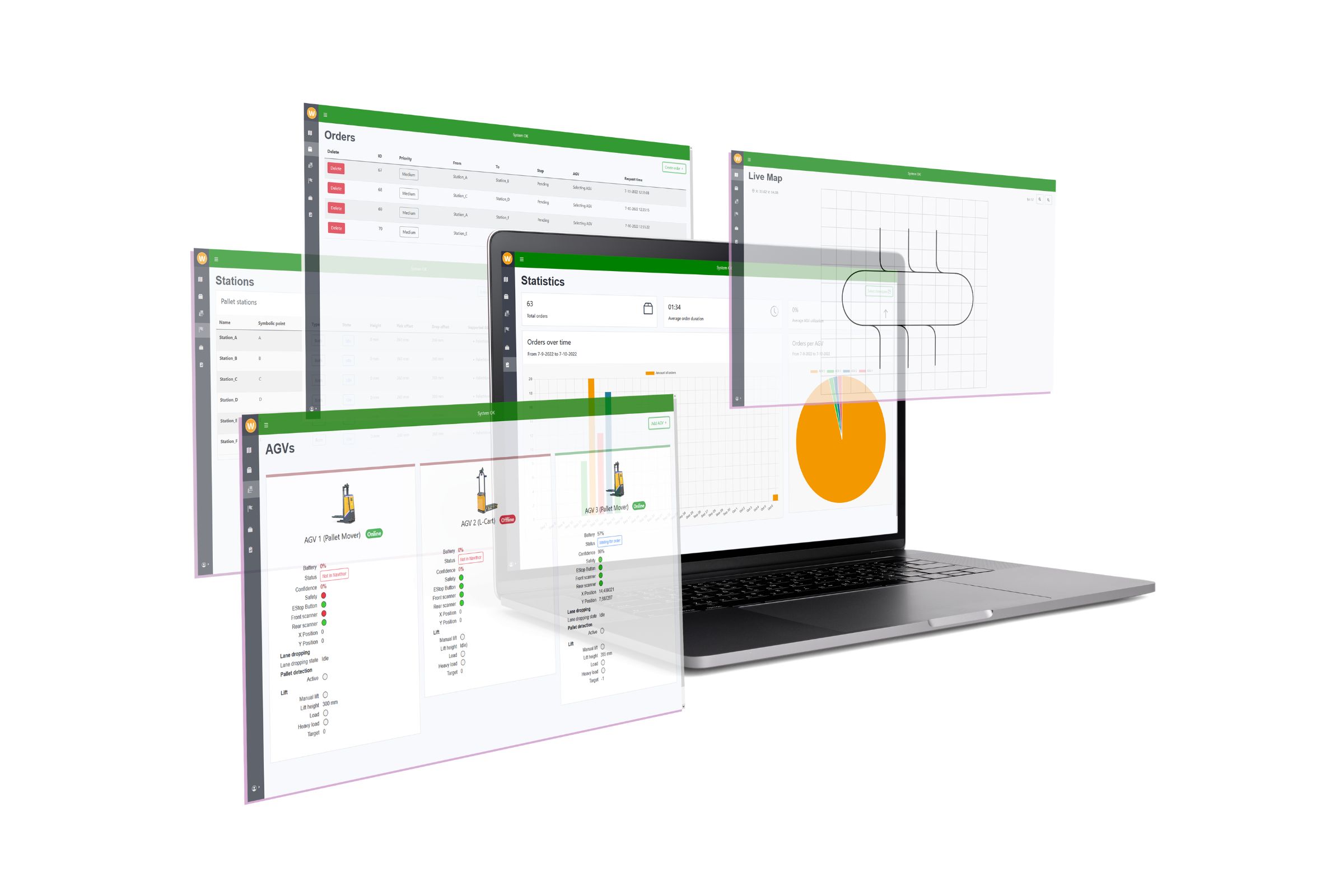
Every WEWO AGV operates within a software layer that coordinates the fleet, manages routes and connects to MES, ERP or other systems already in use. That means the project integrates into the existing process, not only into the physical space.
The WEWO portfolio covers both standard pallet transfer and applications requiring greater lift height. Palletmover Stacker can reach up to 2,500 mm, and the Counterbalance variant can be configured with a lift height of up to 3.5 m for positioning pallets into racking. That helps us choose the right model without forcing the same solution onto every flow.
Choose the right AGV for your flow.
The WEWO portfolio includes vehicles for standard pallet transfer, lifting, cart handling and special applications.
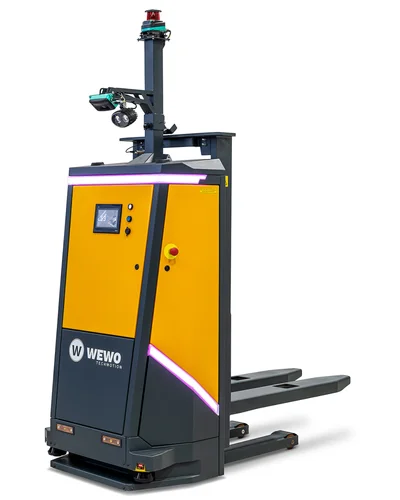
A solution for standard pallet transfer in repetitive flows, where stability and clean integration matter more than unnecessary complexity.
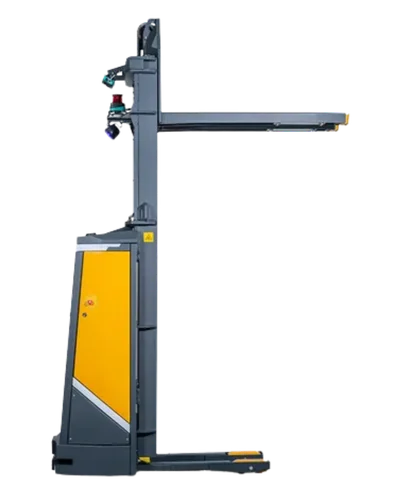
The variant for scenarios where lifting is required alongside transfer — for buffering, interfaces, or positioning at greater heights.
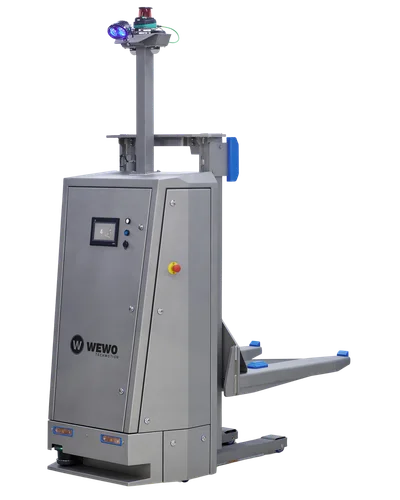
A version dedicated to sensitive environments, where materials, hygiene and resistance to particular operating conditions are important criteria.
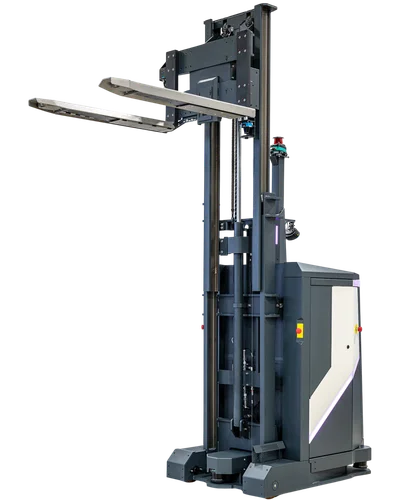
A configuration for more flexible pallet handling and applications with greater lift height, including positioning into racking.
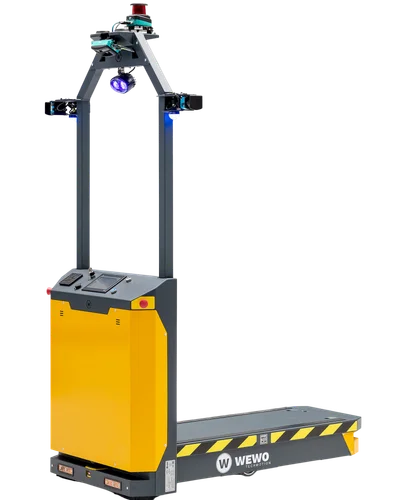
A vehicle oriented towards cart handling and the transport of special carriers, useful where the flow is not built around the classic pallet.
How to choose the right WEWO AGV model
The WEWO portfolio should be read according to the flow you want to automate, not only according to the shape of the vehicle. Below, the main models are placed in the context of the operations they suit best.
For repetitive flows between production, buffer, staging and dispatch, Palletmover is usually the most logical starting point. What matters here is stability, clean integration and repeatability of movement.
In floor-to-conveyor scenarios, where the AGV has to feed or collect from transfer points, conveyors or palletisers, the Palletmover and Palletmover Stacker models cover most common cases.
For floor-to-rack applications, where positioning into the storage or buffer area matters alongside transport, Palletmover Stacker naturally becomes relevant.
When the application calls for greater lift height and positioning pallets into racking, the Counterbalance model comes into the discussion. Depending on configuration, it can cover lift heights up to 3.5 m.
When the flow is not built around the standard pallet, or where there are special handling requirements, the WEWO portfolio can move towards L-cart or custom-made builds, depending on the application.
The scenarios above appear across several industries that use intralogistics automation. Relevant industries.
When a standard model is not enough
Alongside the standard models in the portfolio, WEWO can develop custom-made AGVs for applications where the load geometry, the interfaces or the flow logic call for a different build. In projects of that kind the solution is defined starting from the load carrier and the real process, not from a generic model.
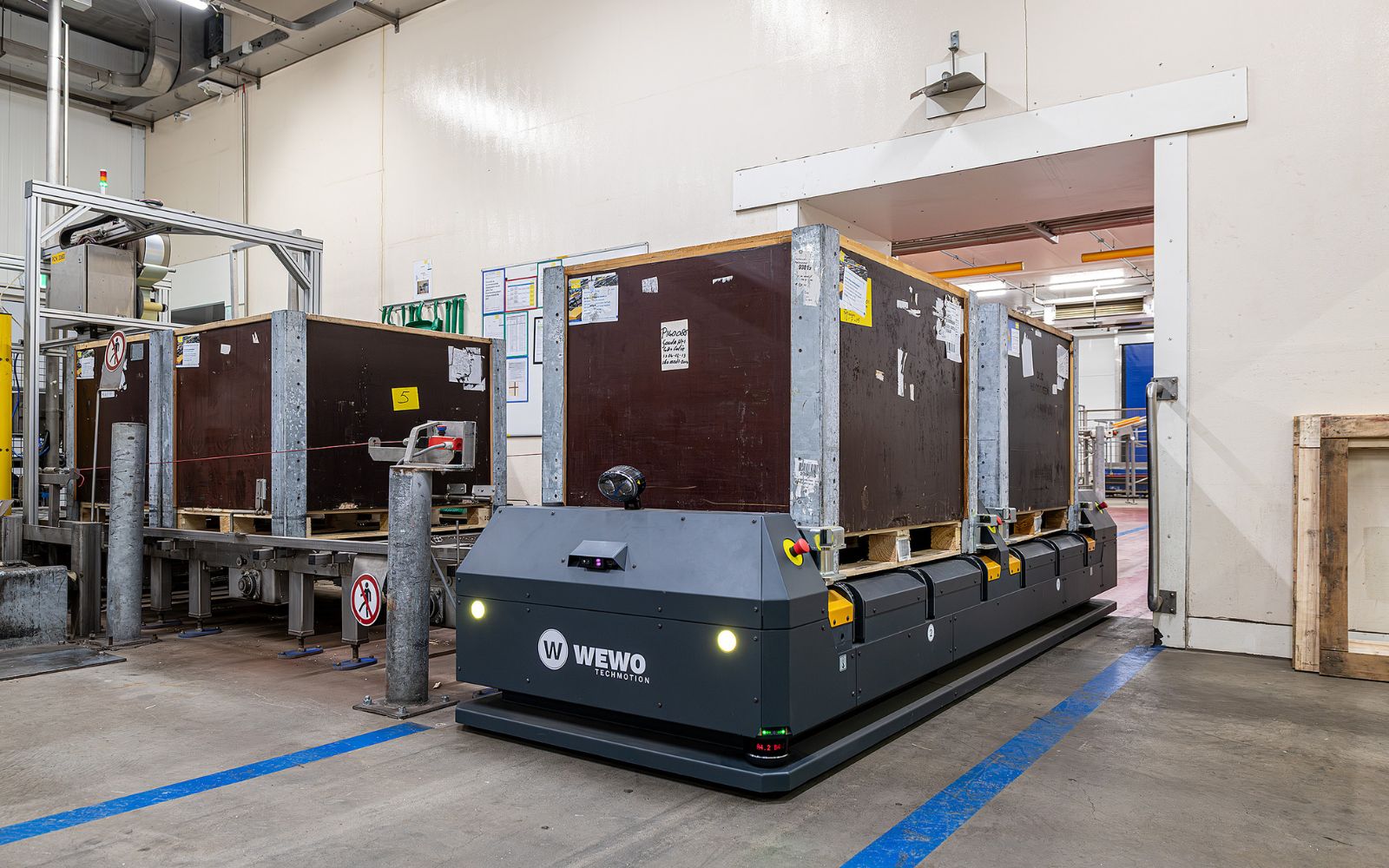
Software, guidance and safety in the WEWO ecosystem
WEWO delivers every AGV together with its fleet management, navigation and mapping software, and the guidance method is chosen according to the application: natural navigation, laser guidance, line guidance or rail guidance. Safety is built around the real risk in the process, rather than added on generically.
Fleet control and operating logic
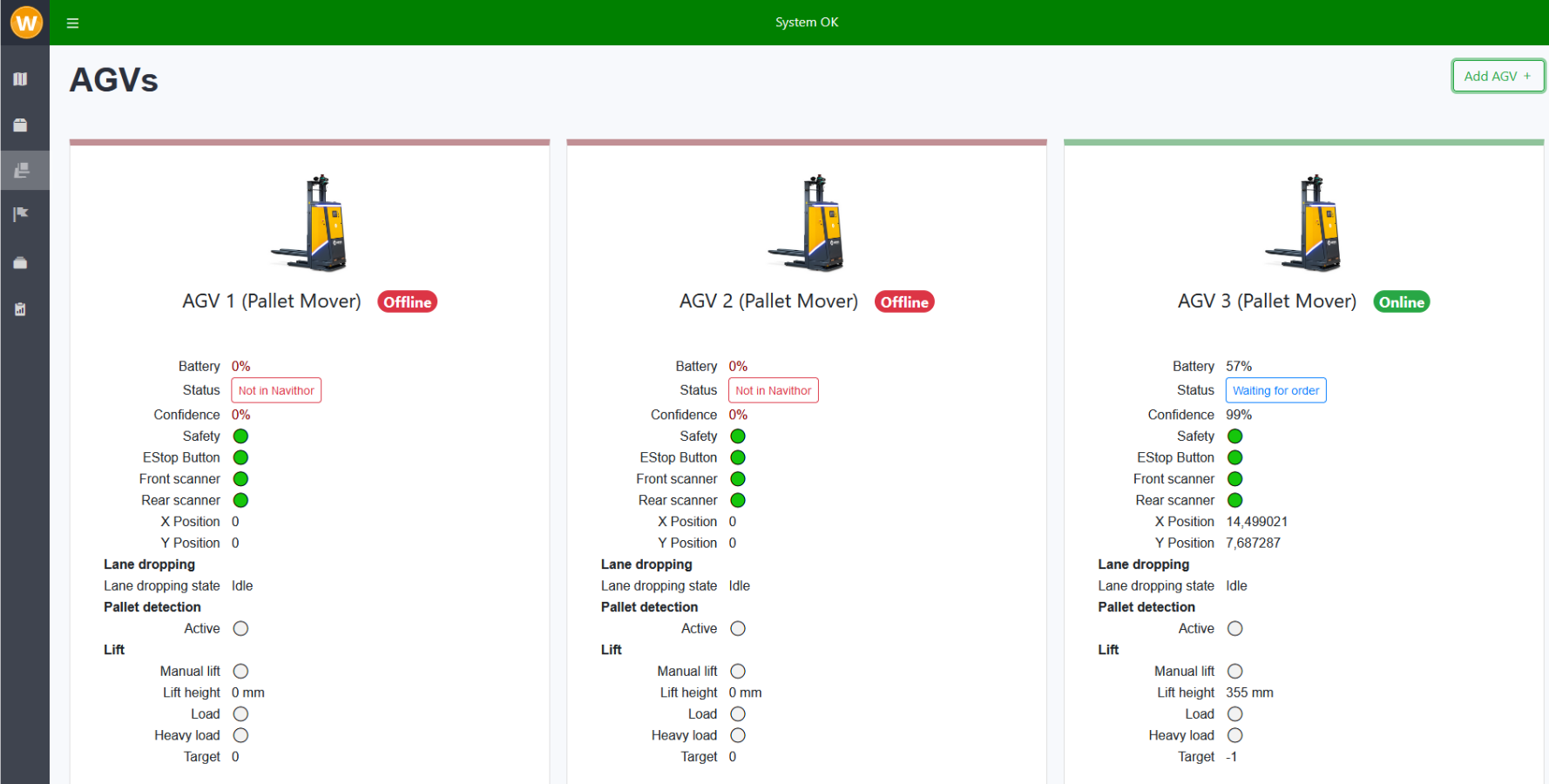
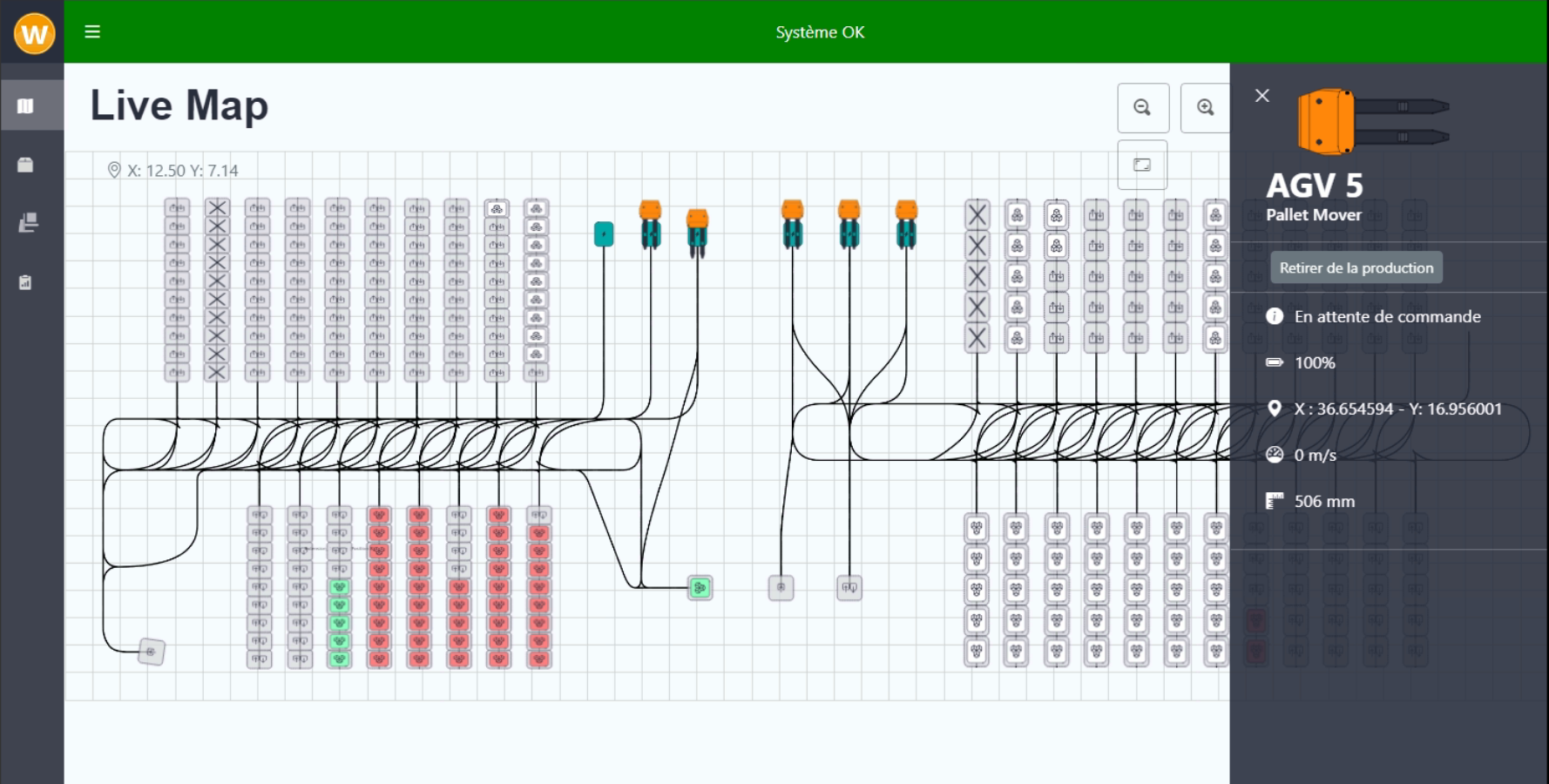
WEWO works with dedicated fleet management software, navigation software and mapping software. This control layer allows vehicles to be managed in production or warehousing, routes to be configured, and integration with existing systems such as MES or ERP.
The guidance method is chosen according to the application
WEWO does not treat guidance as a universal setting. Depending on the environment, the AGV's function and the dynamics required, natural navigation, laser guidance, line guidance or rail guidance can be used. The right choice directly influences the accuracy, the flexibility and the robustness of the system.
Safety considered at system level
WEWO places emphasis on conformity with European regulations and on the use of safety scanners to define and monitor safety zones. Depending on the risk and the application, the solution can also include additional sensors, safety edges, bumpers, blue spots, lighting, acoustic signals and emergency stops.
Clean integration into existing processes
The practical value of an AGV depends on how it connects to the rest of the flow. For WEWO, the software, the guidance and the safety approach have to be aligned with conveyors, interfaces, traffic rules and the systems already in use, so the implementation stays coherent and scalable.
How we choose the right WEWO model for your flow
Novomatix consultants always begin from the process, the transfer type, the interface points, the load carrier and the real constraints on site. Our role is to establish where a standard model makes sense, where additional lifting or integration is needed, and where the project calls for a special build.
We establish whether the application is floor-to-floor, floor-to-conveyor, floor-to-rack, cart handling or a special case, and what positioning height the solution has to reach. That logic determines whether we are discussing Palletmover, Stacker, Counterbalance, L-cart or a custom build.
Knowing the weight of the load is not enough. The positioning height, the type of carrier, the interfaces with conveyors or racking and the geometry of the transfer area all matter. These elements decide whether we are discussing Palletmover, Stacker, Counterbalance, L-cart or a custom-made build.
The chosen model has to work coherently within the operating logic, not in isolation. We therefore treat the choice together with the software, the guidance, the safety approach and the rules for integration into the existing process.
Once the model is validated, we set the order of the stages, the interfaces with existing equipment, the operating rules, and how the fleet can grow from a small pilot to wider coverage without the system having to be redesigned.
Questions about WEWO AGVs
The choice starts from the transfer type and the lift height the application needs. For floor-to-floor, Palletmover is usually the starting point. For transfers involving lifting and for floor-to-rack, Palletmover Stacker becomes more relevant. For applications with greater lift height and positioning into racking, Counterbalance comes into the discussion.
Yes. The WEWO portfolio can cover floor-to-floor pallet transfer, floor-to-conveyor interfaces and floor-to-rack applications, depending on the model selected and the project configuration.
It depends on the model. Palletmover Stacker can reach up to 2.5 m, and Counterbalance can be configured up to 3.5 m for applications positioning pallets into racking.
Alongside the standard models, WEWO can also develop custom-made AGVs for applications where the load geometry, the interfaces or the flow logic call for a different build from the standard portfolio.
WEWO treats the complete system, not just the vehicle. That means fleet management software, navigation software and mapping software, a guidance method chosen according to the application, and a safety approach built around the real risk and the real process.
The project starts with an analysis of the flow, the interfaces, the load carrier and the real constraints on site. After that stage, the appropriate model, the integration approach and the implementation scenario are validated.
Would you like to see which WEWO model fits your flow?
Tell us what type of transfer, which interfaces and which load carrier you have in the process, and we will help you choose the WEWO model that suits your application.
Talk to a specialist