

Automation shaped by the processes
of each industry
Flows and constraints differ from one industry to the next. That is why we start from the process: what is transported, how materials move, where bottlenecks appear, and what integration is required.
Different processes. The same question: where does automation make sense?
Every industry has its own rhythms, load carriers, constraints, and integration requirements. We analyse the physical material flow to identify where automation can improve continuity, safety, and operational control.
- Flow
- What is transported, and between which points.
- Rhythm
- The frequency, the volumes, and the variability of the process.
- Environment
- The space available, the traffic, and the operational constraints.
- Integration
- How the automation interacts with people, systems, and existing equipment.
Integration adapts to the architecture of the process
- Architecture 01
Standalone
The AMR/AGV system manages its fleet and its missions independently of WMS, MES, or ERP. Missions can be triggered locally by operators, buttons, sensors, stations, or other mechanisms defined for the process.
- Architecture 02
Integrated with existing systems
Where the process calls for it, the AMR/AGV system can exchange orders, statuses, and information with WMS, MES, ERP, or other operational systems.
In both configurations — standalone or integrated with existing systems — AMR/AGV can interact with the infrastructure and equipment of the process: conveyors, automatic doors, lifts, transfer stations, lines, and other equipment.
A flow synchronized with production, not merely automated transport
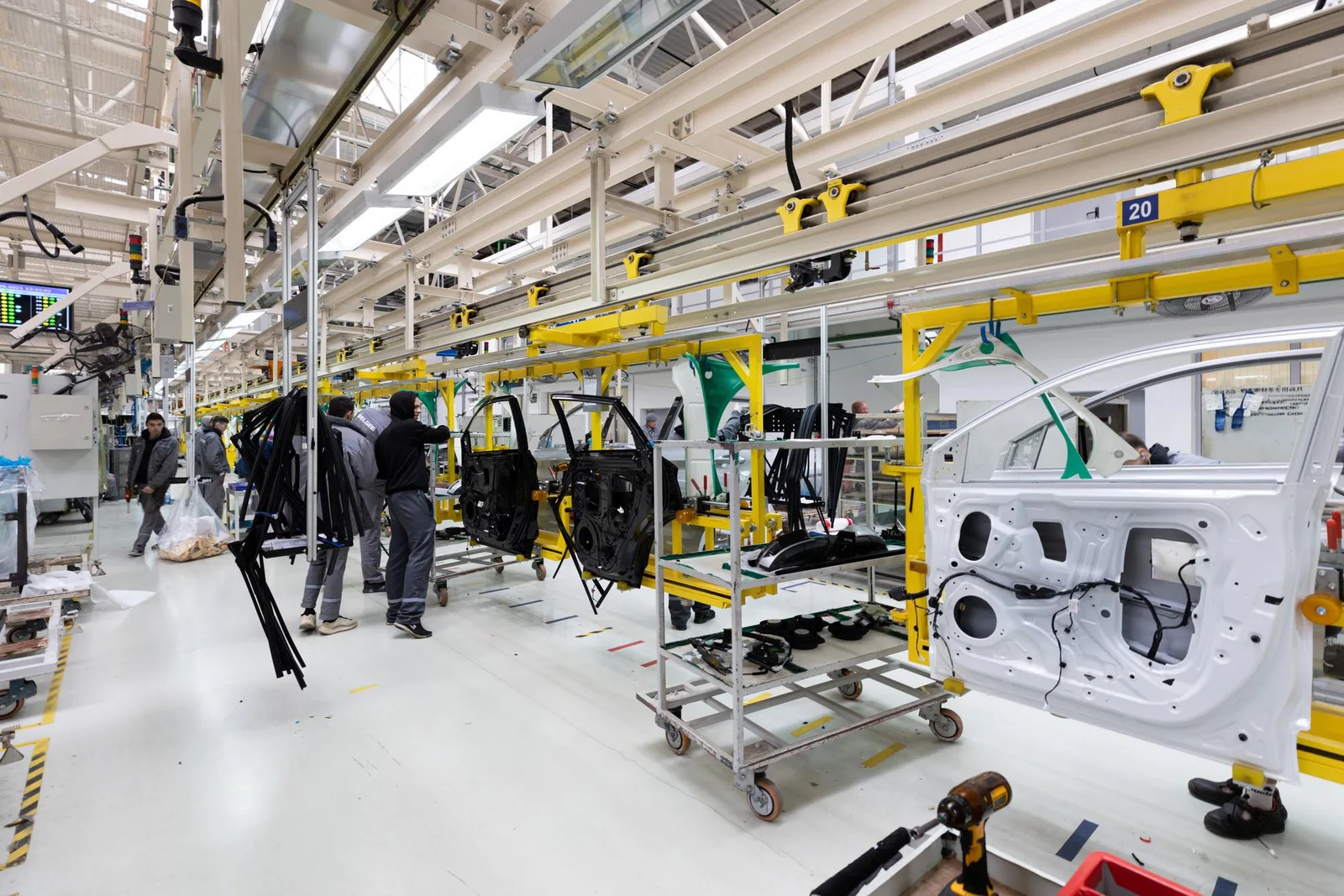
In automotive, intralogistics automation has to sustain the rhythm of production. Line feeding, the movement of sub-assemblies, the return of empty pallets, containers, and carts, and the pickup of finished goods all have to be coordinated so that internal transport never becomes a bottleneck.
Typical operational flow
- Supermarket / intermediate stock
- Kitting / sequencing
- Line feeding
- Production / assembly
- WIP / sub-assemblies
- Finished-goods pallet pickup
- Staging / warehouse
- Line
- empty pallets / containers / carts
- reuse point
Where we step in
Line feeding
AMR/AGVAMR/AGV transport between the supermarket, the preparation areas, and the production lines.
WIP & sub-assemblies
AMR/AGVAMR/AGV transfer between operations, cells, and intermediate areas.
Return flows
AMR/AGVTransporting empty pallets, containers, and carts back to the reuse points.
Finished-goods pallets
AMR/AGVPicking up finished-goods pallets and moving them by AMR/AGV to staging or to the warehouse.
When the flow reaches the pallet
In processes where finished goods have to be consolidated onto a pallet, automated palletizing can become part of the same intralogistics flow.
- End-of-line
- Stackbot / automated palletizing
- finished pallet
- AMR/AGV
- staging / warehouse
Stackbot builds the pallet, and the AMR/AGV system can pick the finished pallet up and continue the transport to the next logistics stage.
Continuous flow between production and internal logistics
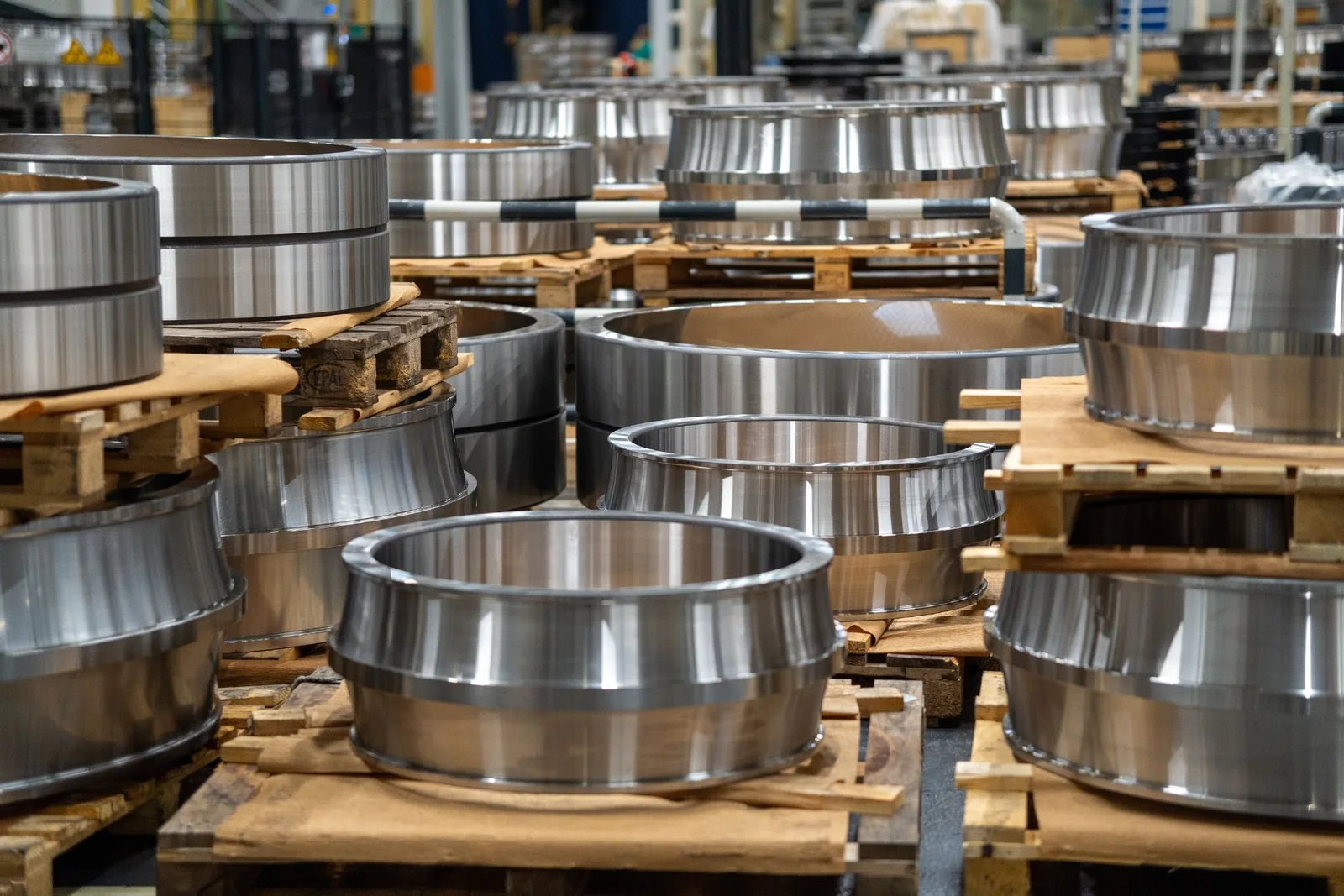
In manufacturing, internal transport has to keep pace with production. Finished-goods pallet pickup, empty-pallet supply, feeding lines, cells, and machines, and WIP transfer all have to be coordinated so that materials arrive where they are needed, without waiting and without repetitive manual trips.
Typical operational flow
- Production
- End-of-line
- Finished-goods pallet pickup
- Staging / warehouse
- Pallet magazine / warehouse location
- Empty pallet
- End-of-line
- Warehouse / supermarket
- Line / Cell / Machine Feeding
- Production
- Production sequence A
- WIP / buffer
- Production sequence B
What we automate in the internal flow
Finished-goods pickup
AMR/AGVFinished-goods pallets are picked up at end-of-line and moved to staging or to the warehouse.
Empty-pallet replenishment
AMR/AGVEnd-of-line positions are replenished with empty pallets taken from the pallet magazine or from dedicated locations in the warehouse.
Production supply
AMR/AGVMaterials and components are moved from the supermarket or buffer to the lines, cells, and machines that consume them.
Transfer between production sequences
AMR/AGVWork in progress is transferred between production sequences, cells, and buffer areas, at the rhythm the process requires.
When the flow reaches the pallet
At end-of-line, finished goods can be palletized automatically, and the resulting pallet can be picked up directly by the AMR/AGV system for the next logistics stage.
- End-of-line
- Stackbot / automated palletizing
- finished pallet
- AMR/AGV
- staging / warehouse
Stackbot builds the pallet, and the AMR/AGV system picks it up and continues the transport to staging or to the warehouse.
A predictable goods flow, from receiving to dispatch
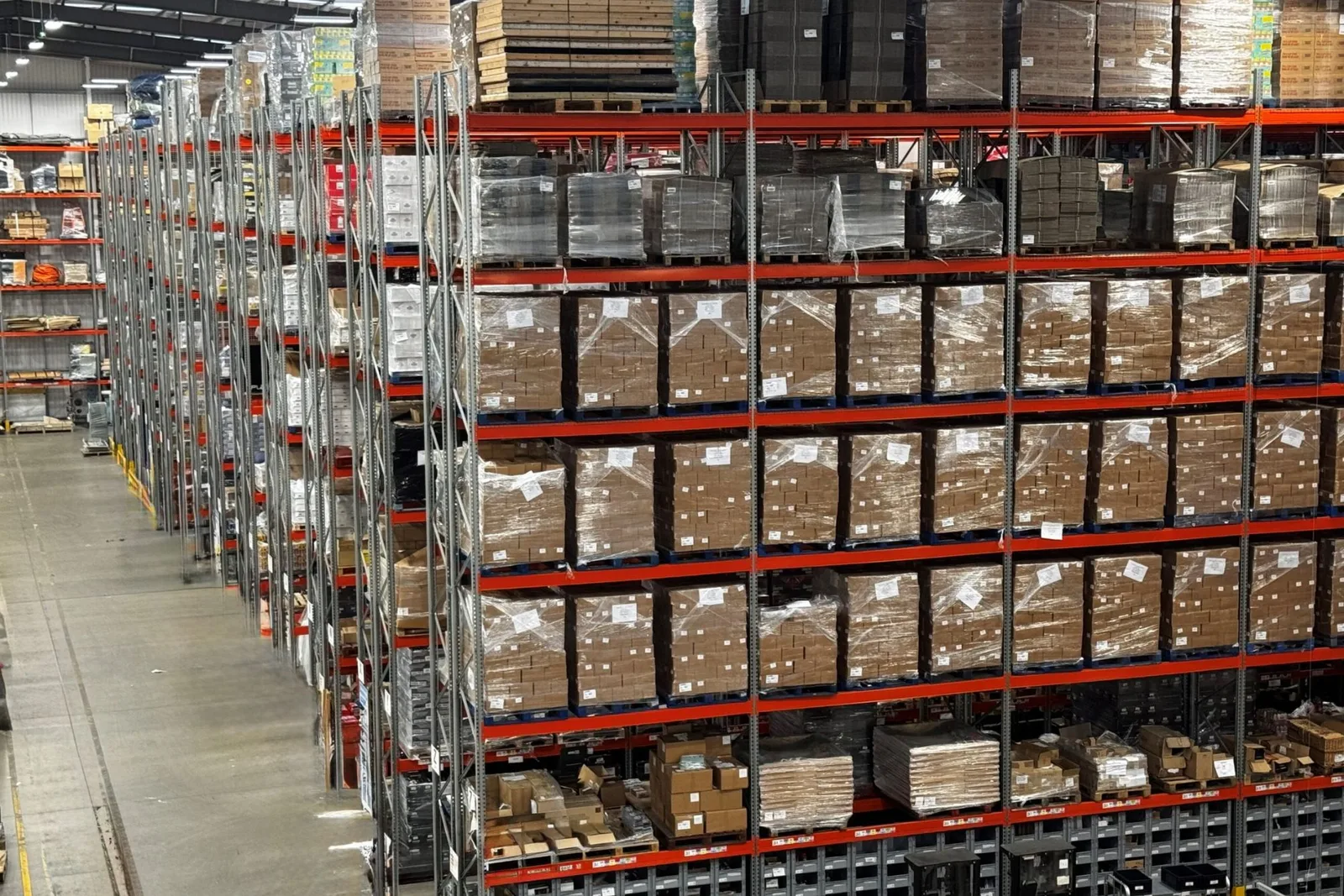
In 3PL and logistics operations, pallets have to move between receiving, storage, the preparation areas, and dispatch at a rhythm set by volumes and priorities. AMR/AGV can take over the repetitive transport between these areas, reducing traffic from manually operated equipment and supporting a more predictable flow.
TYPICAL OPERATIONAL FLOW
- Receiving
- Pallet pickup
- Put-away / storage
- Storage
- Pallet pickup
- Picking / preparation area
- Pallet prepared after picking
- AMR/AGV
- Automated / manual stretch wrapping
- Staging / loading
- Empty-pallet stock
- AMR/AGV
- Point of use
WHAT WE AUTOMATE IN THE INTERNAL FLOW
PUT-AWAY
AMR/AGVReceived pallets are collected from inbound and moved to storage locations or storage areas.
REPLENISHMENT
AMR/AGVPallets are moved from storage to the picking areas, the preparation areas, or other points of use.
POST-PICKING / OUTBOUND
AMR/AGVPallets prepared after picking are collected and moved to automated or manual stretch wrapping, then on to staging and loading.
EMPTY-PALLET SUPPLY
AMR/AGVEmpty pallets are moved from their dedicated storage areas to the points where they are needed.
VALUE-ADDED SERVICES (VAS) & PALLETIZING
In 3PL operations that include value-added services (VAS) — packing, repacking, promotion preparation, repackaging, or other work on the products — automated palletizing can complete the preparation flow. The mobile robot moves the pallet that picking has already prepared; it does not perform the picking itself.
- VAS / packing / repacking
- Stackbot / automated palletizing
- finished pallet
- AMR/AGV
- stretch wrapping
- staging / loading
Continuous flow from end-of-line to the warehouse
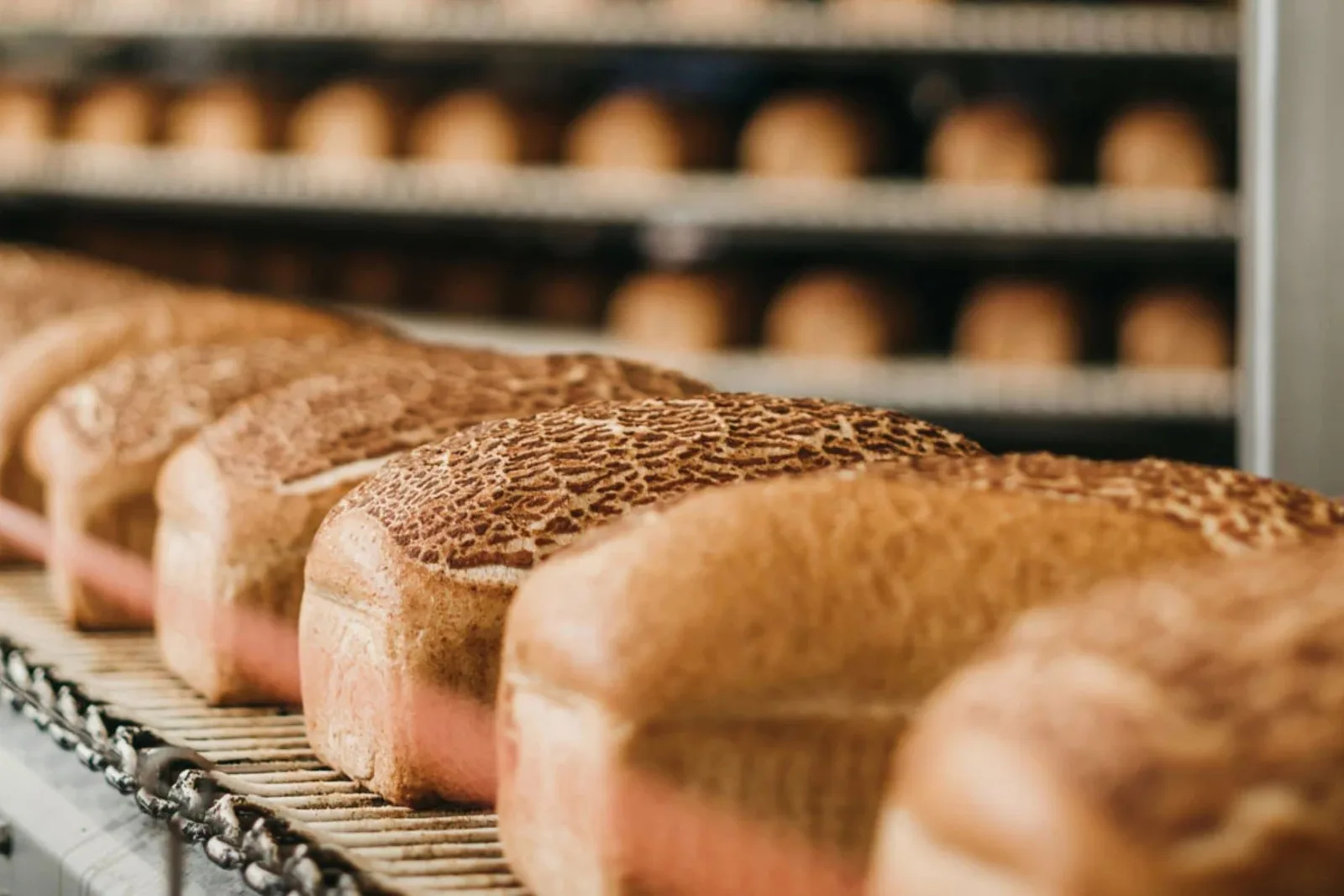
In FMCG and Food & Beverage, high volumes and a steady line rhythm make end-of-line critical to production continuity. Palletizing, empty-pallet supply, packaging materials feeding, and finished-goods pallet pickup have to be coordinated so the flow continues without accumulation or waiting between production and the warehouse.
TYPICAL OPERATIONAL FLOW
- End-of-line
- Automated palletizing
- Finished-goods pallet pickup
- Staging / warehouse
- Pallet magazine / warehouse
- Empty pallet
- Palletizing area
- Warehouse / supermarket
- Packaging materials
- Packaging / line
WHAT WE AUTOMATE IN THE INTERNAL FLOW
FINISHED-GOODS PALLET PICKUP
AMR/AGVFinished-goods pallets are collected from the palletizing area or from end-of-line and moved to staging or to the warehouse.
EMPTY-PALLET SUPPLY
AMR/AGVEmpty pallets are taken from the pallet magazine or from dedicated storage locations and moved to the palletizing area.
PACKAGING MATERIALS FEEDING
AMR/AGVPackaging materials — boxes, cartons, film, containers, and other packaging consumables — are moved from the warehouse or supermarket to packaging and to the line's points of consumption.
PALLETIZING AND END-OF-LINE CONTINUITY
Automated palletizing can take on the rhythm of the line and run directly in the same flow as the autonomous transport of finished-goods pallets.
- End-of-line
- Stackbot / automated palletizing
- finished pallet
- AMR/AGV
- staging / warehouse
- Pallet magazine
- empty pallet
- palletizing area
The empty pallet enters the palletizing area, and the finished-goods pallet leaves for staging or the warehouse.
Stainless steel, where the application calls for it
For applications where the operating environment requires a specific construction, AMR/AGV solutions can be configured in stainless steel, according to the requirements of the project.
A controlled flow between production supply and the finished product
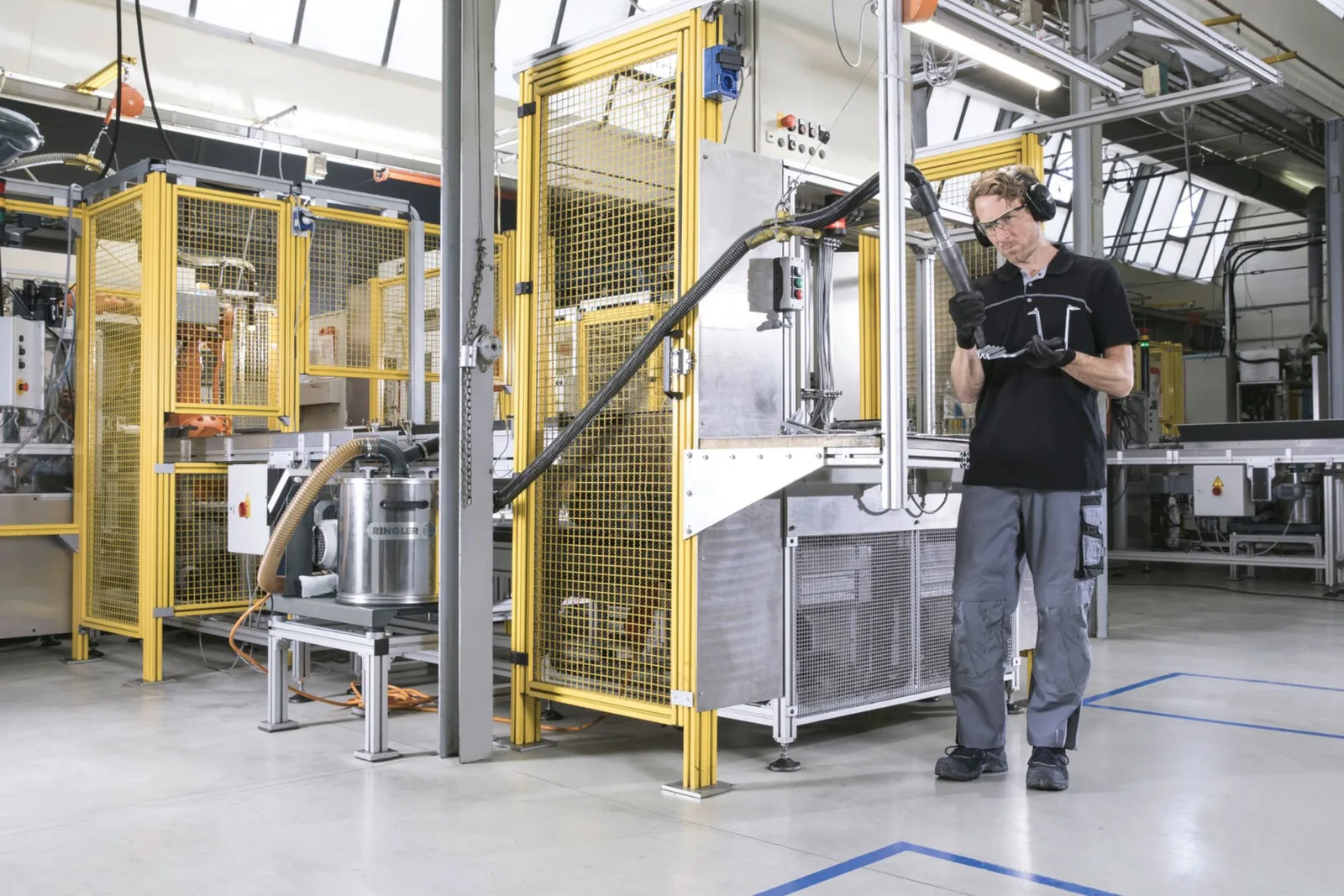
Electronics production involves large volumes of components, kits, containers, and products at different stages of completion. Automating internal transport can support the rhythmic feeding of production, the transfer between production sequences, and the movement of finished products to the next logistics stage.
TYPICAL OPERATIONAL FLOW
- Supermarket / buffer
- Components / kits
- Production line / cell
- Production sequence A
- WIP / buffer
- Production sequence B
- Production / test / packaging
- Finished-goods pickup
- Staging / warehouse
The load carrier varies with the process: containers, carts, racks, or pallets.
WHAT WE AUTOMATE IN THE INTERNAL FLOW
PRODUCTION SUPPLY
AMR/AGVThe components, kits, and materials the process needs are moved from the supermarket or buffer to the lines, the cells, and the points of consumption.
TRANSFER BETWEEN PRODUCTION SEQUENCES
AMR/AGVWork in progress is transferred between production, test, and inspection sequences and the buffer areas.
FINISHED-GOODS PICKUP
AMR/AGVCompleted products are collected after production, test, or packaging and moved to staging, to the warehouse, or to the next logistics stage.
For flows where packaged products are consolidated onto a pallet, automated palletizing and finished-pallet pickup can be integrated into the same logistics sequence.
Controlled flows, predictable transport, and configurations adapted to the environment
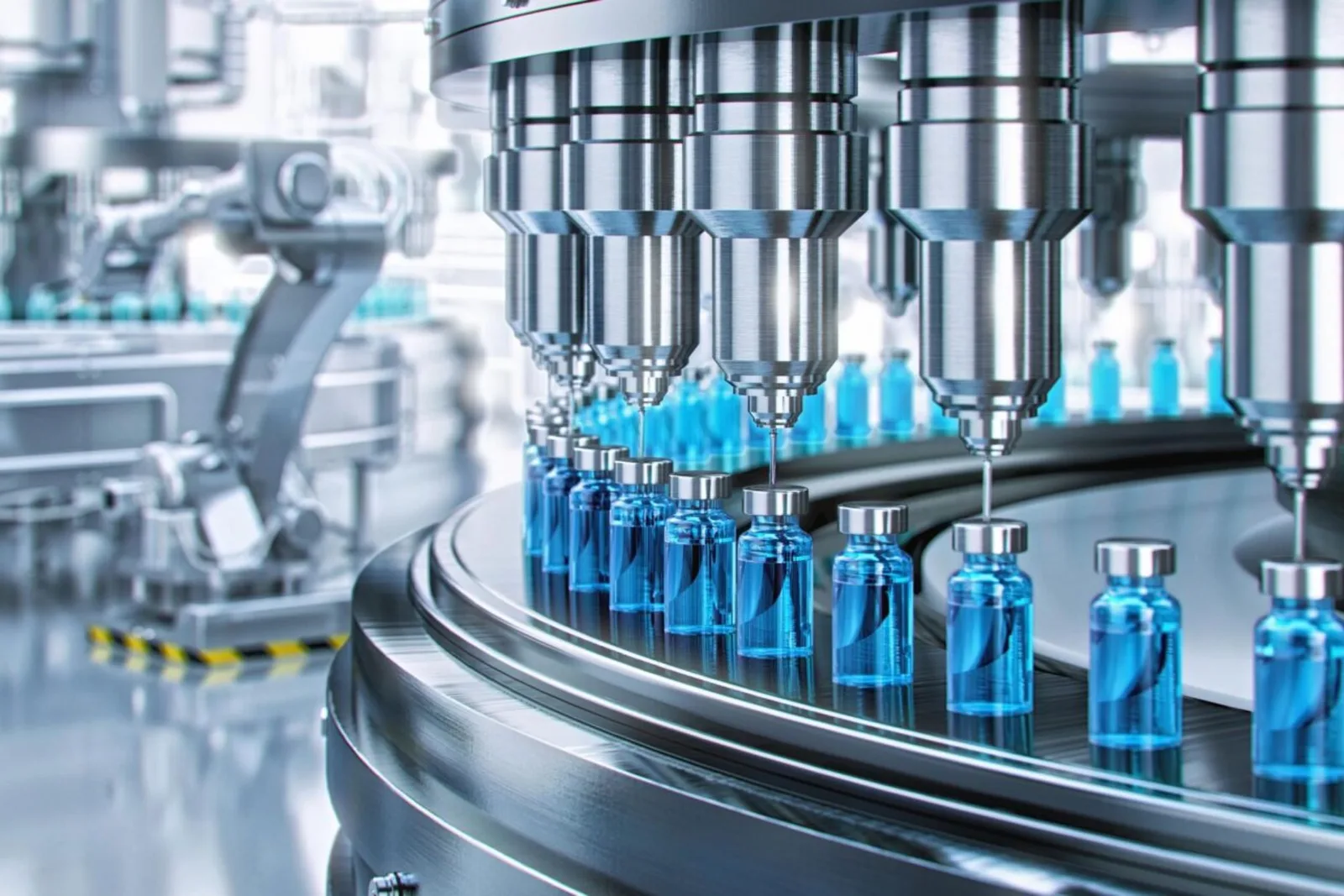
In pharma, internal transport has to fit into a rigorously defined process, with predictable movements of materials, WIP, and finished goods. The AMR/AGV solution can be configured to the requirements of the application and of the operating environment, including in stainless steel where that is required.
TYPICAL OPERATIONAL FLOW
PHARMA MANUFACTURING
- Stock / buffer
- Materials / components
- Production / packaging
- Production sequence A
- WIP / buffer
- Production sequence B
- Packaging
- Finished-goods pickup
- Staging / warehouse
- Secondary packaging
- Finished pallet
- AMR/AGV
- Staging / warehouse
PHARMA DISTRIBUTION
- Receiving
- Pallet pickup
- Put-away / storage
- Storage
- Replenishment
- Order preparation area
- Order / prepared pallet
- AMR/AGV
- Staging / loading
WHAT WE AUTOMATE IN THE INTERNAL FLOW
PRODUCTION AND PACKAGING SUPPLY
AMR/AGVThe required materials and components are moved between the storage, production, and packaging areas.
TRANSFER BETWEEN PRODUCTION SEQUENCES
AMR/AGVWork in progress is transferred under control between the stages of the process and the buffer areas.
FINISHED-GOODS PICKUP
AMR/AGVFinished goods are collected after packaging and moved to staging, to the warehouse, or to the next logistics stage.
PALLET TRANSPORT
AMR/AGVPallets are moved between receiving, storage, the operational areas, and staging, according to the defined flow.
PALLETIZING IN PHARMA MANUFACTURING
In plants where secondary packaging ends with pallet building, automated palletizing can be integrated directly with autonomous transport to staging or to the warehouse.
- Secondary packaging
- Stackbot / automated palletizing
- finished pallet
- AMR/AGV
- staging / warehouse
Stainless steel, where the application calls for it
For applications that require a construction adapted to the operating environment, AMR/AGV solutions can be configured in stainless steel, according to the requirements of the project.
Shall we look at what kind of automation makes sense in your industry?
If you recognized your operation in one of the industries above, tell us your operational context. We will look together at where automation makes sense and which configuration suits the real process.
Talk to a specialistRelevant pages
Mobile robots (AMR/AGV)
See the manufacturers in our portfolio and the transfer types we automate in the warehouse and in production.
See detailsAutomated palletizing
Explore the Stackbot solution for end-of-line automated palletizing and integration into production flows.
See detailsServices
See how we approach selection, implementation, integration, and support for automation projects.
See details